




Challenging stereotypes; a deeper look into supporting men in the workplace
Reframing men’s mental health support.
To properly support men’s mental health in the workplace, it’s helpful to understand why certain behaviours exist, how to look beyond stereotypes, and how best to approach meaningful conversations.
To provide professional insights into men’s mental health, including tips for leaders, we spoke with Simon Brown-Greaves, an Organisational Psychologist at Assure with decades of experience providing men with support. He starts by explaining how men have a different way of thinking about mental health.
Simon illustrates how catching up with mates for social sport, working on cars together, jamming with musician friends etcetera — might seem like harmless fun, but there is usually something much deeper at play.
“Just because they’re not seeing a counsellor, doesn’t mean they’re not getting help”
When men are comfortable with each other, their social connection becomes a safe space. Conversation might seem limited to their joint interests, or general family chat, but if someone needs support, they know they can open up and be listened to.
What about the workplace?
Being aware that men think about mental health differently is important context, and something to be mindful of when addressing it in the workplace. Most managers and workplaces are cognisant of prioritising employees’ mental health, but there are some factors to bear in mind when it comes to men in particular. It’s also worth mentioning that not all men behave the same way and have the same views — so some of this information will apply to some men, but may not be applicable to all.
What are the signs to look for in colleagues?
Rather than a checklist of warning signs that might indicate if someone is struggling with their mental health, Simon explains that there’s only one main criterion to be aware of.
“A list of ‘symptoms’ isn’t particularly helpful, as many men to go great lengths to be private, and hide what they’re really going through. You just need to be aware when they’re being different in some way to how they normally are”.
If someone is not being their usual self, and you notice it, that’s the time to act. It’s important to not be too judgemental, and realise that there’s usually something behind the behaviour, maybe a struggle. If someone is not performing as well as they usually do, the temptation might be to
focus on the decreased performance, but by opening up the conversation and letting that person know it’s a safe space to talk, you might find out what’s really going on.
Avoiding workplace stereotypes
Simon reiterates the point that progressive workplaces shouldn’t be accepting outdated ‘traditional’ gender roles. Citing, for example, how women can be given more leeway for family responsibilities, and men can be expected to partake in social (drinking) activities.
“We need to shift our expectations to genuinely support employees’ choices regarding their home life and family duties. Men prioritising family time over drinks with workmates should be normalised, but some men see extracurricular activity — like a corporate box at the footy, out-of-work drinking — as an imposition but feel obliged to say yes”.
Workplace support
Looking out for your colleagues’ wellbeing should be a constant. As Simon puts it;
“Every day needs to be R U OK Day”
Competent managers are already aware of checking in with employees regularly, but reminders about other services (like your EAP) can also be helpful. Assure’s Wellbeing Gateway platform, for example, provides the ability to connect with a professional clinician 24/7 365, for any work or personal issue.
Reframing support
“Men are more comfortable writing ‘executive coaching session’ in their diary, rather than shrink appointment”
Simon notes how the men he sees for executive coaching are happier with that terminology, even though the conversations and outcomes are more closely aligned to traditional psychology. The reframing makes it more acceptable.
Conversation Tips
A meaningful conversation is how support starts. Letting someone know they are cared for and supported and giving them the opportunity to be vulnerable is incredibly powerful. Simon emphasises this point as being paramount to connecting with someone and offering your help.
“Never underestimate the power of a good conversation”
Below are some guidelines regarding engaging in conversation with your employees.
Be the listener, not the fixer.
You’re not there to provide a solution. Personal experience and relevant anecdotes can be helpful but be mindful of ‘trauma competition’ and oversharing, or ‘trauma dumping’. Your role is to listen and when appropriate, recommend further services, like your EAP.
Don’t shy away from tough topics.
If an employee brings up something sensitive, you should keep talking to let them know you’re supportive, without reaching for a resolution. Simon describes the process of taking on board difficult topics as a possible a step towards that person seeking further help, like counselling, or EAP support.
“Them airing it can push them to the next step — you can listen to anything they want to share, be open and let them talk”.
Beyond the issue at hand.
It’s worth remembering too, the issue they bring up could be a symptom of something deeper. The issue might be a relationship breakdown, but what sits behind the initial problem? Work stresses? Physical debilitation?
Something on your mind?
If you require counselling, coaching or support, our clinicians are available to help.
Call, chat or request an appointment online.
Looking for more resources?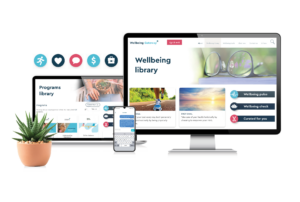
Register for Wellbeing Gateway. Your personalised mental health and wellbeing companion.